Berlin Skyline

Berlin Skyline
Property Hotspot Berlin
Showing posts with label Berlin. Show all posts

Saturday, 15 February 2020

Is Steglitz-Zehlendorf getting their first "Milieuschutzgebiet"

The Berlin Senat and not the local administration has instructed an investigation into rent levels and tenant squeeze out in the districts residential areas. The result was quite surprising.

Bierpinsel, Berlin-Steglitz


The residential area around Schlossstrasse is ranking first place in the district displacement hit-list. In the area between Steglitzer Kreisel, "Bierpinsel" and Paulsenstrasse, the experts attest above-average rising rents, rising purchase prices and an above-average increase in conversions from rented to condominiums.
Both the location, the high proportion of old buildings and the fact that so far only 12.9 percent of the residents have owned their apartment there, threaten to change the structure of this neighbourhood. The previously socially mixed residential area could be a place of residence, especially for high-income couples and families.


Schloßstrasse Berlin-Steglitz

The situation in the planning districts Markelstrasse, Feuerbachstrasse and Mittelstrasse looks similar.

A heated discussion within the local district office which has a different political leaning to the Senat,
has started. A vote to establish a protected area will already provide the protection for the tenants. The implications for property owners are summarized here:
https://germanproperties.blogspot.com/2018/03/the-can-do-and-cant-do-renovating.html

Wednesday, 29 January 2020

New "Milieuschutzgebiet" protected housing area desired in Berlin-Lichterfelde

The SPD parliamentary group wants to combine Kranoldplatz and ten streets into one milieu protection area "Milieuschutzgebiet".

Bild: Fridolin freudenfetthttps://de.wikipedia.org/wiki/Datei:Lichterfelde_Kranoldplatz.JPG
The streets include sections of Königsberger Straße, Jungfernststieg, Oberhofer Weg, Ferdinandstraße, Lorenzstraße, Luisenstraße, Kurfürstenstraße as well as Parallelstraße and Jägerstraße. With its application to the district assembly (BVV), the SPD is responding to the plan pursued by HGHI Holding GmbH by investor Harald Huth to convert the Ferdinandmarkt. According to the SPD, there are fears that the rental level will rise, rental apartments will be converted into condominiums and people will be displaced from their traditional quarters.

Tuesday, 14 January 2020

The Berlin District of Pankow is Eying a New "Milieuschutz" Area

Pankow has currently 9 protected areas, "Milieuschutzgebiete"

Arnimplatz, Bötzowstraße, Falkplatz, Helmholtzplatz, Humannplatz, Kollwitzplatz, Teutoburger Platz and Winsstraße. Some of them were covered in this blog.

No.10 is in the making:

Danziger Straße Ost

Millieuschutzgebiet Danziger Straße Ost


Photo by Jonas Denil on Unsplash

Tuesday, 7 January 2020

Surfing in Berlin?

Since November 2019 Berlin has Germany's widest (8.5 m) and highest (1.6m) indoor wave.It is called Wellenwerk ® at Landsberger Allee 270, 10367 Berlin (Lichtenberg).

The artificial wave, built on the site of`BerlinerWasserbetriebe, is a mere ten-minute car-ride from Alexanderplatz, is suitable for all surfing styles,from body boards to thrusters, and built with a focus on sustainability. On November 22nd, 2019, the Wellenwerk indoor surf arena opens in Landsberger Allee 270, a former pumping station and historic monument: Events and dinning areas will follow soon.The latest citywave® technology will offer local surfers constant waves that are independent of swell and weather conditions in their own backyard. It is the biggest indoor wave in the world, breaking at 1.60 metres and the widest in Germany, at 8.5 metres in width. The pool is 18 metres long and the water and air are a constant 25 degrees Celsius.

Surfing in Berlin


Sustainability is key to the Wellenwerk concept: The facility operates on 100% green hydro-electricity, with water being shot over an adjustable ramp to generate the constant, stationary wave. An innovative heat recovery system also heats the hall, water and neighbouring buildings, ensuring that as well as providing an inner city surf spot the wave also does its bit to preserve the environment that makes real waves in the wild.The standing wave is suitable for all sort of wave riding tools, from thrusters to body boards and customers can either bring their own boards or rent one onsite. A one-hour session within a group costs €39.90, plus a €2 eco-electricity fee–this includes rental gear and a surf coach.

All the details are here: https://wellenwerk-berlin.de/en/


Saturday, 21 July 2018

Spandau Joins the Berlin Districts with "Milieuschutz" Areas

The Spandau District Assembly has voted to have a rough screening performed to identify areas where looming rent increases are likely to push out existing tenants, gentrification.

According to the IVD Berlin-Brandenburg Spandau was the district with the highest rent increases lately. The average rent for "simple" neighborhoods is at 7.75 €/m²/month while Spandau remained one of the last three districts without "Milieuschutz".

The rough screening will start in September.

Zitadelle Spandau
Von Benutzer:sec11 - Fotografiert am 16.04.04, CC BY-SA 3.0, https://commons.wikimedia.org/w/index.php?curid=23985521
Amongst the areas already seen as strong candidates to be included in the protection of "Milieuschutz" are Spandauer Neustadt and Wilhelmstadt to the north and south of the center Altstadt. Another area already discussed is the development "An der Kappe" with ca. 1,100 apartments.

Spandau City Hall
Von A.Savin (Wikimedia Commons · WikiPhotoSpace) - Eigenes Werk, CC BY-SA 3.0, https://commons.wikimedia.org/w/index.php?curid=22550225
We will keep our readers updated on the developments.

More information about the impact of the "Milieuschutz" on the property owners in the area youu can find here:

The Can Do and Can't Do Renovating Apartments in Certain Areas of Berlin

Wednesday, 11 July 2018

Upcoming "Milieuschutz" Areas in Moabit and Tiergarten


The Berlin-Mitte district council put the pressure up for “Milieuschutz”. In their last meeting before the summer break, the representatives demanded the district administration by resolution to identify the so-called observation areas Körner- and Lützowstraße in Tiergarten and Moabit the Lübecker Straße and the Thomasiusstraße and the Beussel district as “Milieuschutz” protection areas. Further to formally announce the dedication of the areas in order to apply the social conservation mechanisms as soon as possible. This means that homeowners must meet certain approval criteria for construction projects and take into account the rent index in the district.
The “Milieuschutz” is an urban and social instrument for avoiding displacement of the existing resident population also known as gentrification.
More information about the impact of the "Milieuschutz" on the property owners in the area youu can find here:

The Can Do and Can't Do Renovating Apartments in Certain Areas of Berlin


Monday, 9 July 2018

New Protected "Milieuschutz" Areas Coming Into Effect In Kreuzberg

Since 1. July 2018 the existing Mileuschutz area Hornstrasse in Berlin Friedrichshain-Kreuzberg is extended on its eastern border.


In detail the new area comprises the residential areas of the neighbouring city hall block ("Rathausblock") between Obentraut- and Yorckstraße and from Mehringdamm to Großbeerenstraße. Also Block 153, defined between Obentrautstraße and Tempelhofer Ufer, Großbeeren- and Ruhlsdorfer Straße.

For the implications for the owners of apartments and apartment blocks in this area please see the article on our blog  Property Investment In Germany.


Sunday, 8 July 2018

Neukölln – the chili pepper in Berlin’s melting pot, by Handelsblatt Global

Sunday, 3 June 2018

New Candidate Areas for "Milieuschutz" in Berlin Mitte


The Berlin district Mitte is considering to add more areas to the existing 5 “Milieuschutz” areas or to use the official title “Städtbauliche Erhaltungsgebiete”. A consortium of experts was instructed to look into areas that previously were suspected of being under pressure regarding modernizations and rent increases. The quarters (Kiez) under investigation are Soldiner Straße, Kattegatstraße, Reinickendorfer Straße and Humboldthain Nord-West.


Soldiner Straße, Berlin Wedding
By A.Savin (Wikimedia Commons · WikiPhotoSpace) [FAL or CC BY-SA 3.0
(https://creativecommons.org/licenses/by-sa/3.0)], from Wikimedia Commons
The study shows that a large proportion of the population in these areas are now in danger of being pushed out by rent increases. Over the last decades, significant public investment went into these areas to improve the quality of living. This has attracted higher income tenants which in turn raises the attention of property investors.
The apartment buildings in these areas have a high potential for modernisation followed by rent increases: e.g. half of the apartments don’t have a balcony, very few have a lift.
These four areas are to be closely monitored for activities leading to the actual decision by the local council. Once the decision for starting the process for the declaration of “Milieuschutz” is published, certain activities like Title Split can already be blocked.
For more information about the implications for a property owner see my articles:


Saturday, 12 May 2018

Visit Berlin Mitte: Berlin's Most Central District Where History and Culture Meets Politics.

Visit Mitte: Explore Berlin’s history and culture in the German capital’s most central district


  • Discover Berlin’s cultural treasures on Museum Island
  • Visit iconic landmarks at the TV Tower and Brandenburg Gate 
  • Walk through Berlin’s history in the city’s oldest neighbourhoods
  • Explore the new creative scene in Mitte’s art galleries, design stores and fashion boutiques 

By Simon Clarke For Mailonline

Read more: http://www.dailymail.co.uk/travel/destinations/article-5717391/guide-mitte-district-berlin.html

A Guide to Neukölln: Berlin’s most happening neighbourhood

Visit Neukölln: Cultural diversity, green spaces and hipster hangouts in Berlin’s most happening neighbourhood


  • Browse the stalls at the twice-weekly Turkish Market
  • Join the cool kids at Weserstraße’s studios, shops and bars
  • Explore the wide expanses of Tempelhofer Feld – one-time airport turned park
  • Grab a sundown drink above the rooftops at Klunkerkranich 

By Simon Clarke For Mailonline


Read more: http://www.dailymail.co.uk/travel/destinations/article-5717675/Guide-Neuk-lln-district-Berlin.html

Friday, 8 September 2017

Did you know ... Berlin still has about 36,000 Gaslights?

The streetlighting in Berlin still shows the former division of the city. The majority of the streetlighting system was destroyed by allied bombing during the war. East Berlin rebuilt it using electricity with no real threat of being cut off. West Berlin with the Berlin Blockade in mind decided to keep the gaslights in operation as the gas could be produced using stores of coal for a while even when cut off supplies.


Of course people are preferring the tone of light over modern neon light so the city jumped a step and is going straight to LED light which imitates the shape and tone of gaslights except in protected areas where the gaslights will be kept in operation despite the fact that their energy consumption is at about 7 times the level of the LEDs.

When you drive or walk around the city you will not even recognize the modern versions of the gaslights.

Wednesday, 6 September 2017

Berlin Lichterfelde and Its Property Outlook 2018

Like many boroughs around the centre of Berlin, Lichterfelde only became part of "Greater Berlin" in 1920 to join the district of Steglitz which recently was joined with the district of Zehlendorf to form the new borough of Steglitz-Zehlendorf.

But even Lichterfelde was made up of smaller parts from Dahlem, the home of Berlin's Free University, to Lichterfelde West with Villas and the Klinikum Benjamin Franklin, the Berlin Botanical Garden and the former US Allied McNair Barracks, and to Lichterfelde Ost with more simple residential areas.
All these areas have kept their individuality with distinct local centres for schools, doctors, shopping and services which provide a focal point for identification with the immediate environment, called "Kiez" in German.
Von Alexrk2 - own work, using OpenStreetMap data, CC BY-SA 3.0, https://commons.wikimedia.org/w/index.php?curid=21950816
 Looking at the housing market for the area it reflects the diversity of its history. It covers many of the various rent levels with Lichterfelde's corner of Dahlem and Lichterfelde-West being in the second tier and the rest in tiers four and five out of eight.

Source: Housing Market Report Berlin 2017 with Housing Cost Atlas, BerlinHyp + CBRE
The rent levels are shown in this table of Housing Market Data provided in the Housing Market Report 2017.
Source: Housing Market Report Berlin 2017 with Housing Cost Atlas, BerlinHyp + CBRE

We currently are offering an investment property in the 12209 post code area. This area will strongly benefit from the eventual opening of the new Berlin Airport BER without being affected by its flight paths. The location is to the north of the airport while the flightpaths are in east-west orientation. Please contact us for more detailed information using http://www.berlin-portfolio.com/InvestmentRequest.html


To download the full Housing Market Report Berlin 2017 please leave your email, you will receive it immediately.

Tuesday, 24 January 2017

Distribution of the international population of #Berlin by nationality and district

Distribution of the international population of Berlin by nationality and district


Foreign population of Berlin

  • People from about 190 countries call Berlin home and make this city a truly international metropolis.
  • In 2015, 114,000 persons came to Berlin from abroad, about a quarter of which have Syrian nationality.
  • The share of people from foreign countries in the total population is 17.2 percent.
  • Berlin is a cosmopolitan city with international educational and cultural institutions.
  • Workers from western European industrial nations and the states of central and eastern Europe are migrating to Berlin.
 http://www.businesslocationcenter.de/en/business-location/business-location/economic-data/demographic-data

Tuesday, 10 March 2015

The New Lifestyle Center of Berlin-Mitte


Chausseestrasse at the north end of Friedrichstrasse in Berlin-Mitte is the new Lifestyle Center of the city.


The immediate environment is developing fast. Every visit brings new discoveries, a new espresso bar, a new restaurant, a hidden away well-established restaurant or the new bio-supermarket. There are attractions like the climbing garden “Mountmitte", the Natural History Museum and others at nearby Invalidenstrasse. For art lovers, the contemporary arts gallery at the “Hamburger Bahnhof” – is within a few minutes walking distance.
Looking at an aerial view, the amount of interspersed green areas become apparent. Bigger parks like Humboldhain or Tiergarten are within comfortable jogging distance. Pankepark and the Park am Hauptbahnhof (currently under development) surround the vicinity of  Chaussestrasse.


The company offices, some of them Germany headquarters, and federal ministries in the area are numerous. A few examples: Deutsche Bahn AG (3,000 office jobs), Vattenfall, Total, Bayer-Schering Pharma, Charité (University Hospital w. 3,800 doctors and scientists).  Federal Ministry (FM) of Transport, Building and Urban Development, FM of Economics and Technology, FM of Education
 

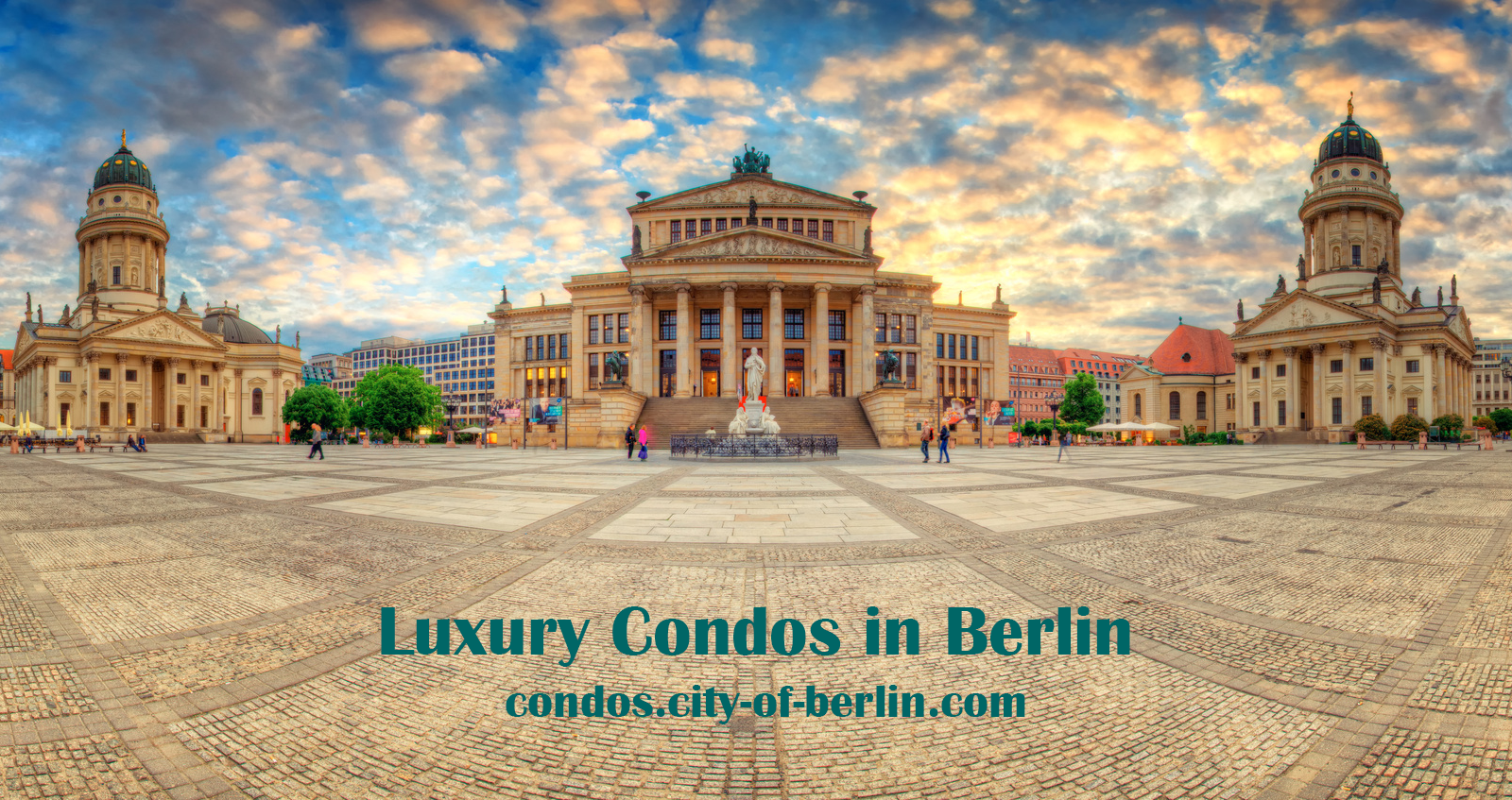
Currently there are several interesting property developments in construction or planned. There is "The Mile", "The Garden Living" and of course Daniel Liebeskind’s prestigious "Sapphire" project, with still more opportunities to come. For an interested buyer, especially living far away, it is a tedious task to follow all the developments, get brochures from all kind of agents and developers and at the same time know what is real and what is "pie in the sky" and might never be built. To help in those situations, there is a service available which provides an independent one-stop-shop for luxury condos in Berlin, especially in the central areas.


Luxury Condos in Berlin
Sign up for information updates at condos.city-of-berlin.com

.

Friday, 27 February 2015

Prices up by 10.1% for Condos in Berlin 2014

Average purchase prices for condominums in the Berlin property market increased significantly by 10.1 per cent in 2014. The highest asking prices for apartments in existing buildings were registered in the central districts.


Mitte 3,646 €/m²
Friedrichshain-Kreuzberg 3,269 €/m²
Charlottenburg-Wilmersdorf3,129 €/m²


However the top market segment median in Mitte was at  6,184, up 3.8% from 2013.

At the same time dirstricts like Neukölln and Treptow-Köpenick also saw considerable in creases year-on-year with 17.4 per cent and 13.7 per cent for the latter.

Specific data down to postcode districts are in the Housing Market Report Berlin 2015 available for download at this link.


Saturday, 29 September 2012

Berlin Marathon 2012

Once again Berlin is in the center of attention: The 39th BMW Berlin Marathon.
Due to the fact that six world records have been broken since 1998, including Haile Gebrselassie’s 2011 record of 2:04, Berlin's is the world’s fastest marathon course. In addition to a fast course, it provides a great overview of the cities modern and historic sites.

Berlin Marathon
Berlin Marathon
To visit the official website click here.

The marathon starts at the Brandenburg Gate on the boarder between the districts of Berlin-Mitte and Tiergarten.

Monday, 30 July 2012

Why is Berlin-Prenzlauer Berg still a Property Investment Destination

Prenzlauer Berg
Right from the beginning of the discovery of Berlin as a Property Investment Hotspot for International Investors in 2004 the area of Prenzlauer Berg or "Prenzlberg" to the locals was one of the focus points. It soon became too expensive for reasonable investments and there still was a lot to do. At this point many tenants and investors tuned to the neighboring Friedrichshain. Still today Friedrichshain is more "studenty" whereas Prenzlauer Berg is more "Bohemian" with a higher level of rents (and income). Here is some backgound information:

Prenzlauer Berg was developed during the second half of the 19th century based on an urban planning design from 1862 by James Hobrecht, the so-called Hobrecht Plan for Berlin. Envisaged as a working-class district, its tenement houses (in German: Mietskasernen) were mainly inhabited by intellectuals, artists, and students in the former German Democratic Republic.

This area of former East Berlin is now perhaps the most sought after area to live for professionals and young families.  The area was relatively unscathed by Second World War bombing, leaving street after street of intact 19th and early 20th century apartment buildings.  It offers an abundance of beautiful pre-war ‘Altbau’ buildings, the vast majority of which have been completely restored since unification of the city.  Rising property values have led to more wealthy residents moving into some areas of the borough.

It is close to central Berlin and has a lively café, bar and restaurant scene as well as several parks and green spaces. Popular places to go out include Kastanienallee, Kollwitzplatz (home to the sculptor Käthe Kollwitz), with its excellent Saturday market, Kulturbrauerei (an expansive brewery which has been transformed into a centre for culture and evening entertainment) and Helmholtzplatz.   Keeping in rhythm with a slower, more livable pace, this area also abounds with several weekly street markets and the world-famous Mauer Park Flea Market every Sunday.  This area is also home to countless advertising, design and media firms and traditionally the bohemian quarter of East Berlin,this is still a haven for artists and alternative culture, despite gentrification.
Some of the Highlights of Prenzlauer Berg
The varied history of Berlin comes to life in this neighborhood through its many diverse cultural and social offerings. Truly this is one of the most interesting places to take in all that this reborn city has to offer, which also makes for an ideal property investment opportunity in Berlin.

Over a period of only 3 years the purchase prices for apartments in Prenzlauer Berg rose from 2,300 €/m² to 3,000 €/m² while the rents in the same time span went from 7.30 €/m²/month to 9.24 €.

Because of its ambiace Prenzlauer Berg is attractive as a location for condos to be used by he investor as much as a buy to let investment in rented apartments. Attractive developments with excellent potential and both options are coming up for sale . More detailed information can be found here: www.falkenberg-solutions.com.


Property Listing for Berlin, Germany 30.07.2012

The new Property Listing from Properties-in-Berlin.com is now available at their website.

Demand is still high and despite the summer break many purchases were notarized but it seem that the price hike at the beginning of the year has flattened out.

Financing with a reasonable LTV is still an obstacle for many investors, espacially for investment volumes between 1 to 5 million Euro. As always, equity dictates the market.

properties-in-berlin.comThe residential rent levels have risen significantly throughout the last two years so that we can expect that the next official Rent Table for Berlin which should come out May 2013 for some regions will be up by more than 15%. This mean that existing rental contracts can be checked for increase potential. It might be wise to hold back with increases right now as the rent has to remain unchanged for 15 months after an increase.

More information available on www.falkenberg-solutions.com.